
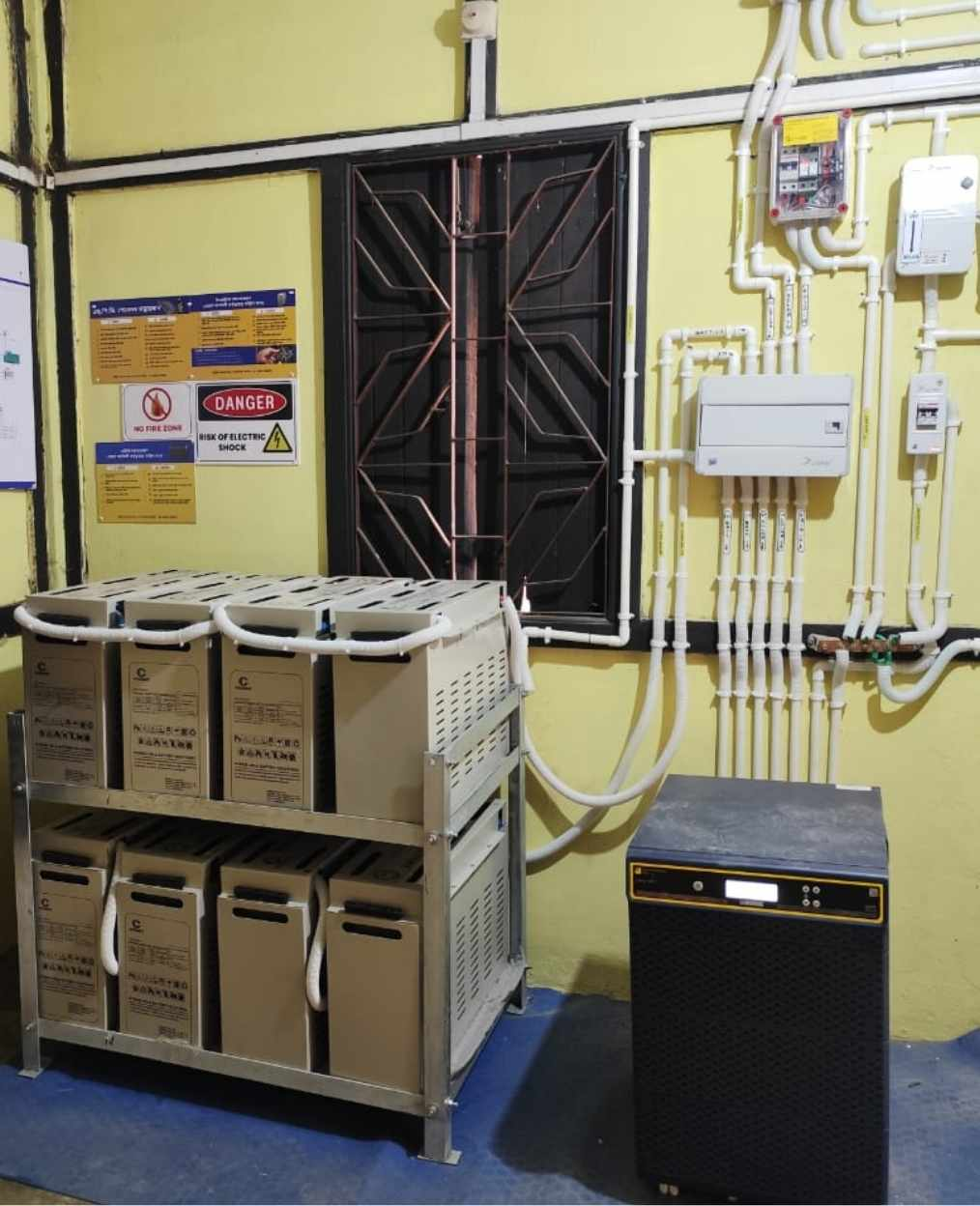
Hybrid Rooftop Solar vs On-Grid Solar in Manipur
As rooftop solar adoption continues to grow in Manipur, one question comes up more often than any other:
Should I choose an on-grid solar system or a hybrid rooftop solar?
The answer depends on how you use electricity, how important backup power is to your household, and how much you are willing to invest. Both systems can help reduce your electricity bills. The difference is what happens when the grid goes down.
Understanding that difference can help you make a better long-term decision.
What is an On-Grid Rooftop Solar System?
An on-grid solar system is connected directly to the electricity grid.
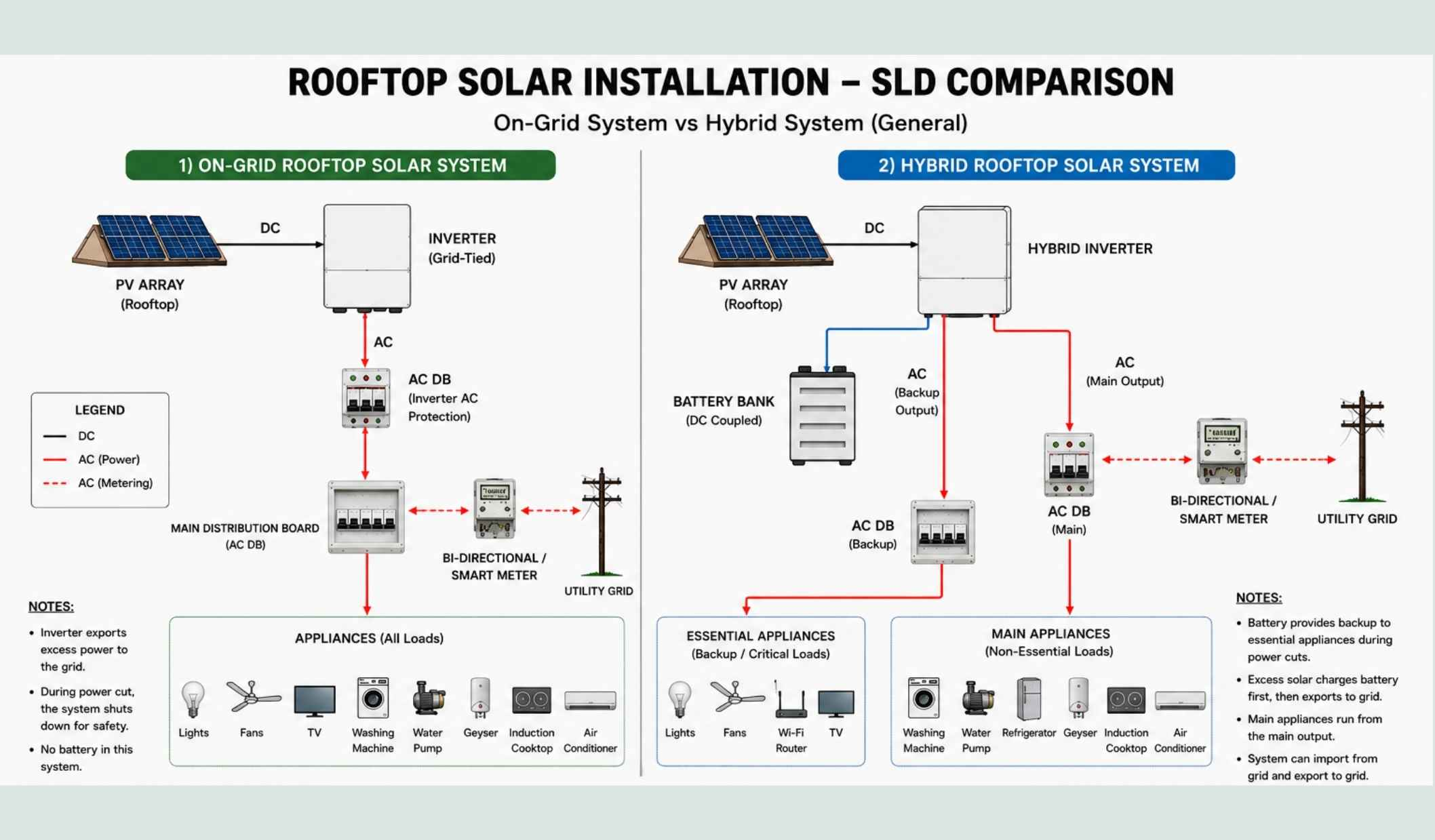
During the day, your solar panels generate electricity that is used by your home. Any excess power can be exported to the grid through net metering. The exported energy helps offset the electricity you draw from the grid later, allowing the grid to function somewhat like a virtual battery – without the cost and maintenance of physical battery storage., reducing your overall electricity bill.
What is a Hybrid Rooftop Solar System?
A hybrid solar system combines:
- Solar panels
- A hybrid inverter
- Battery storage
- Grid connection
Like an on-grid system, it generates electricity from the sun and helps reduce your electricity bills. However, unlike an on-grid system, it also includes batteries that can store excess solar energy for later use.
When there is a power cut, the system can continue powering selected appliances using solar energy being generated at the time or energy stored in the batteries. This means essential appliances can continue operating even when the grid is down.
In many ways, a hybrid system combines the benefits of rooftop solar and a conventional inverter-battery backup system into a single solution.
Advantages of a Hybrid Rooftop Solar System
Hybrid systems offer several benefits.
Backup During Power Cuts: This is the biggest advantage. Essential appliances can continue operating even when grid power is unavailable.
Greater Energy Security: Homes and businesses become less dependent on the grid and can continue operating during outages.
One Integrated System: Instead of maintaining separate solar and backup systems, everything works together through a single hybrid inverter.
Useful for Critical Loads
Hybrid systems are particularly valuable when certain appliances simply cannot stop working.
Examples include:
- Home offices
- Internet connectivity
- Medical equipment
- Security systems
- Clinics and healthcare facilities
- Small businesses that cannot afford downtime
Is it a good investment?
Things to Consider Before Choosing a Hybrid Rooftop Solar System
While hybrid systems offer additional functionality, they also involve additional investment.
The Manipur Context
A few years ago, frequent power cuts made battery backup a necessity for many households.
Today, power supply in many parts of Manipur – particularly urban areas – has improved considerably.
While outages still occur, electricity is available most of the time for many homes.
How much backup do you actually need?
The answer will be different for every household.
For some, a hybrid solar system may be the right choice. For others, a simpler setup may provide better value.
In many homes, only a few appliances need to remain operational during occasional power cuts. Identifying these essential appliances before designing a solar system can help avoid unnecessary investment in battery storage.
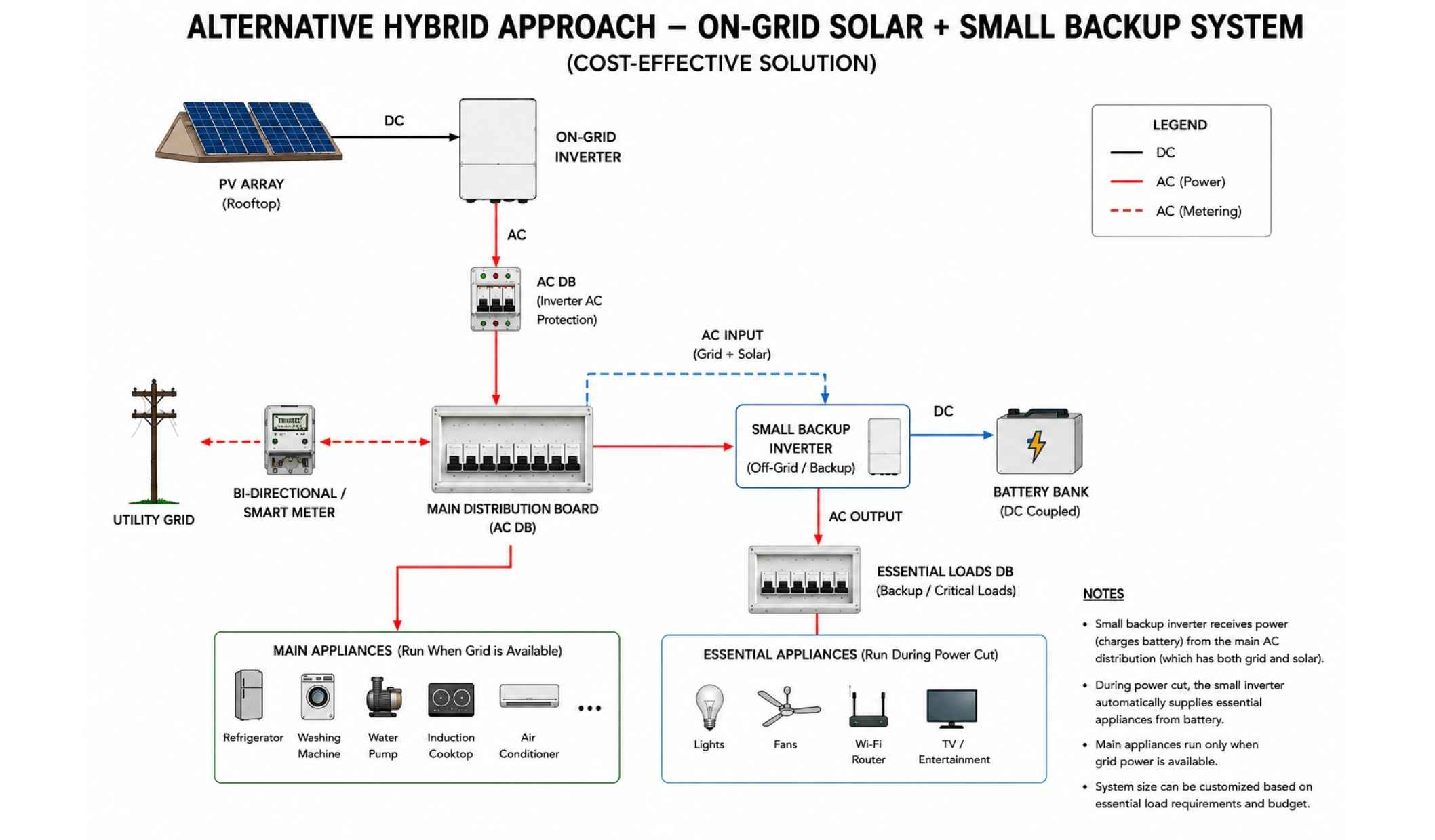
For this reason, many households find that an on-grid solar system paired with a modest inverter and battery backup for critical appliances provides an effective middle ground.
Rather than sizing a system for every possible appliance, focusing on what truly needs to stay operational during an outage often leads to a more practical and cost-effective solution.
This approach allows homeowners to:
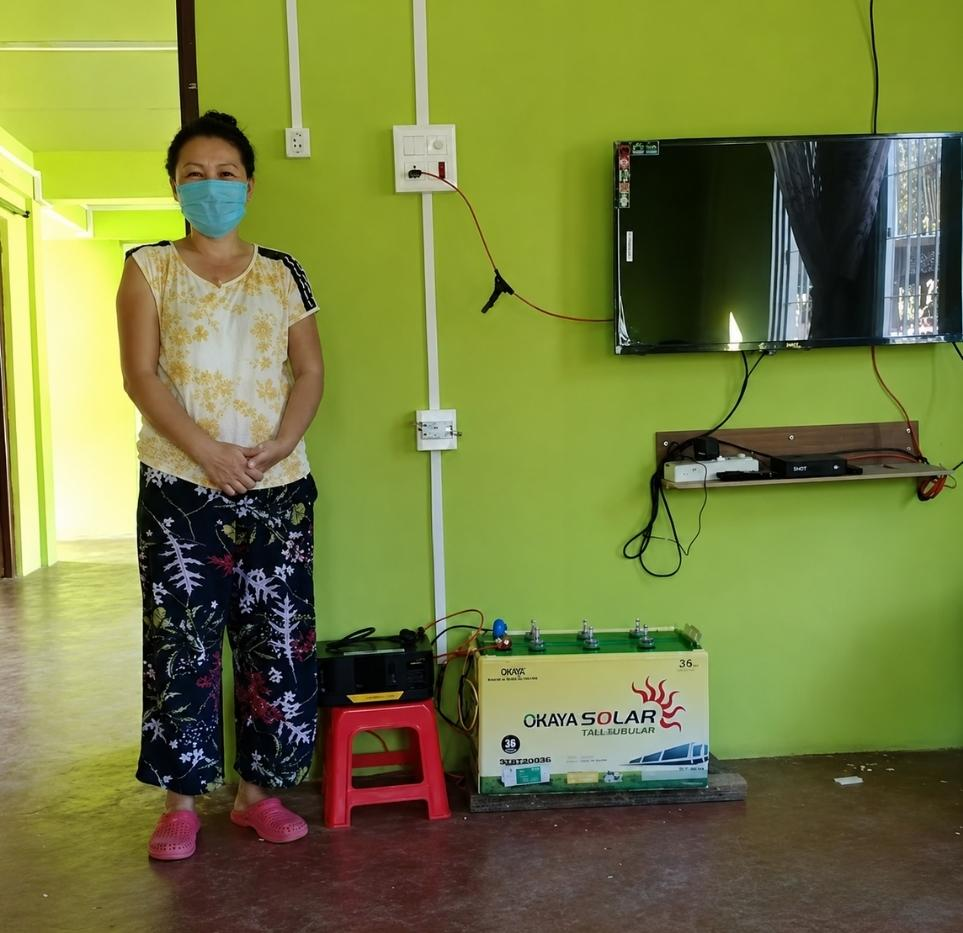
A small backup system can comfortably support essentials such as lighting, fans, Wi-Fi, phone charging, and entertainment devices during occasional power cuts.
Meanwhile, larger appliances such as water pumps, washing machines, geysers, and air conditioners can continue operating whenever grid power is available.
For many homes, this provides a practical balance between affordability and reliability.
An Alternative Worth Considering
For many households, an on-grid solar system paired with a modest inverter and battery backup for essential appliances can be an effective middle ground.
This approach allows homeowners to:
A small backup system can comfortably support essentials such as lighting, fans, Wi-Fi, and entertainment devices during occasional power cuts, while larger appliances continue operating when grid power is available.
For many homes, this provides a practical balance between affordability and reliability.
The best solution ultimately depends on your home’s energy needs, backup requirements, and budget.
Comparing Your Options
| Feature | On-Grid Rooftop Solar | On-Grid Rooftop + Backup Inverter | Hybrid Rooftop Solar |
|---|---|---|---|
| Reduces electricity bills | |||
| Battery Backup | |||
| Works During Power Cut |
(Selected Appliances) |
(Selected Appliances) |
|
| Initial investment | Lowest | Moderate | Highest |
| Future battery replacement cost | None | Moderate | Highest |
| System complexity | Low | Moderate | Higher |
| Best suited for | Homes focused on saving on electricity bills | Most households, saving bills + essential backup | Homes/businesses needing integrated backup |
Choosing the Right Solar System
There is no single solar solution that is right for every home.
An on-grid solar system is often the most cost-effective option for reducing electricity bills. A hybrid solar system adds backup power and energy security, while an on-grid system paired with a modest backup inverter can provide a practical middle ground for many households.
The best choice depends on your energy needs, backup requirements, and budget. Should you need help deciding, we are happy to provide a Free Consultation.